
Cerebrovascular Reserve in Moyamoya Disease: Relation to Cerebral Blood Flow, Capillary Dysfunction, Oxygenation, and Energy Metabolism."

Exciting New Study! Gaining Deeper Insights into Moyamoya Disease with Cercare Medical's Neurosuite (CMN)!

Scientific Report

The study investigated the association of cerebrovascular reserve (CVR) with various cerebral hemodynamic and energy metabolic parameters in Moyamoya disease (MMD), using perfusion imaging (contrast-based MR and arterial spin label magnetic resonance imaging (ASL-MRI) before and after acetazolamide administration.

  • The progressive nature of MMD warrants monitoring of the patient’s cerebral hemodynamics to evaluate treatment efficacy and the possible need for surgical intervention

  • However, the cerebral hemodynamics in MMD is intricate and involves interactions between macrovascular and microvascular blood flow, oxygenation, and energy metabolism.

  • Cerebrovascular Reserve (CVR) and CBF: Homeostasis is initially preserved via autoregulation but over time the ability to avoid ischemia via vessel dilation when cerebral blood flow (CBF) decreases in both the anterior cerebral artery (ACA) and middle cerebral artery (MCA) territories is lost. A CVR test using ASL can be used to evaluate the integrity of this mechanism.

  • Capillary Dysfunction: Lower CVR in the ACA territory is linked to elevated capillary transit time heterogeneity (CTH), indicating microvascular dysfunction and inefficient oxygen delivery.

  • Oxygenation and Energy Metabolism: Decreased CVR in the ACA territory is strongly associated with higher oxygen extraction fraction (OEFmax), suggesting increased oxygen extraction to compensate for lower CBF.

  • CMRO2 and CBF in MCA Territory: Lower CVR in the MCA territory is associated with lower CBF and higher cerebral metabolic rate of oxygen (CMRO2), indicating increased energy consumption in response to ischemic insults.

The Game-Changer: Cercare Medical Neurosuite

Gain deeper insights into the patient's cerebral hemodynamics and energy metabolism, with the power of Cercare Medical's cutting-edge software. This groundbreaking tool allowed us to non-invasively assess capillary transit time heterogeneity (CTH), oxygen extraction fraction (OEFmax), and cerebral metabolic rate of oxygen (CMRO2max).

Key Findings:

Analysis revealed a reduced cerebrovascular reserve (CVR) in both anterior cerebral artery (ACA) and middle cerebral artery (MCA) territories. Additionally, we observed lower baseline CBF, elevated CTH, and increased OEFmax in the ACA territory, and lower CVR in the MCA territory was associated with reduced CBF and higher CMRO2max.

New scientific report from Uppsala
Read the Full article: https://www.frontiersin.org/articles/10.3389/fneur.2023.1190309/full
Ready to Transform Your Diagnostic Capabilities?

Join Us in Advancing Brain Health with Cutting-Edge Microvascular Modeling.
Contact Us Today to Learn More!
© 2025 Cercare Medical. All rights reserved.

CLINICAL USE CASES AND TECHNICAL HIGHLIGHTS


CLINICAL USE CASES
  • Assess outcomes post-intervention: detect missed stenoses, distal occlusions, or microvascular disturbances.
  • Guide complementary therapies on the spot based on perfusion status.
  • May detect the no-reflow phenomenon — providing insight into cases where recovery may fail despite successful thrombectomy.
  • Potentially enables direct-to-angio workflows.

TECHNICAL HIGHLIGHTS
  • Full set of perfusion markers: CBF, CBV, MTT.
  • Advanced oxygen metabolism imaging: OEF, CMRO₂.
  • Reliable results with as few as 5 CBCT acquisitions (bolus injection timing protocol very important).
  • Integrated with Siemens and Philips systems; GE/Canon under evaluation.

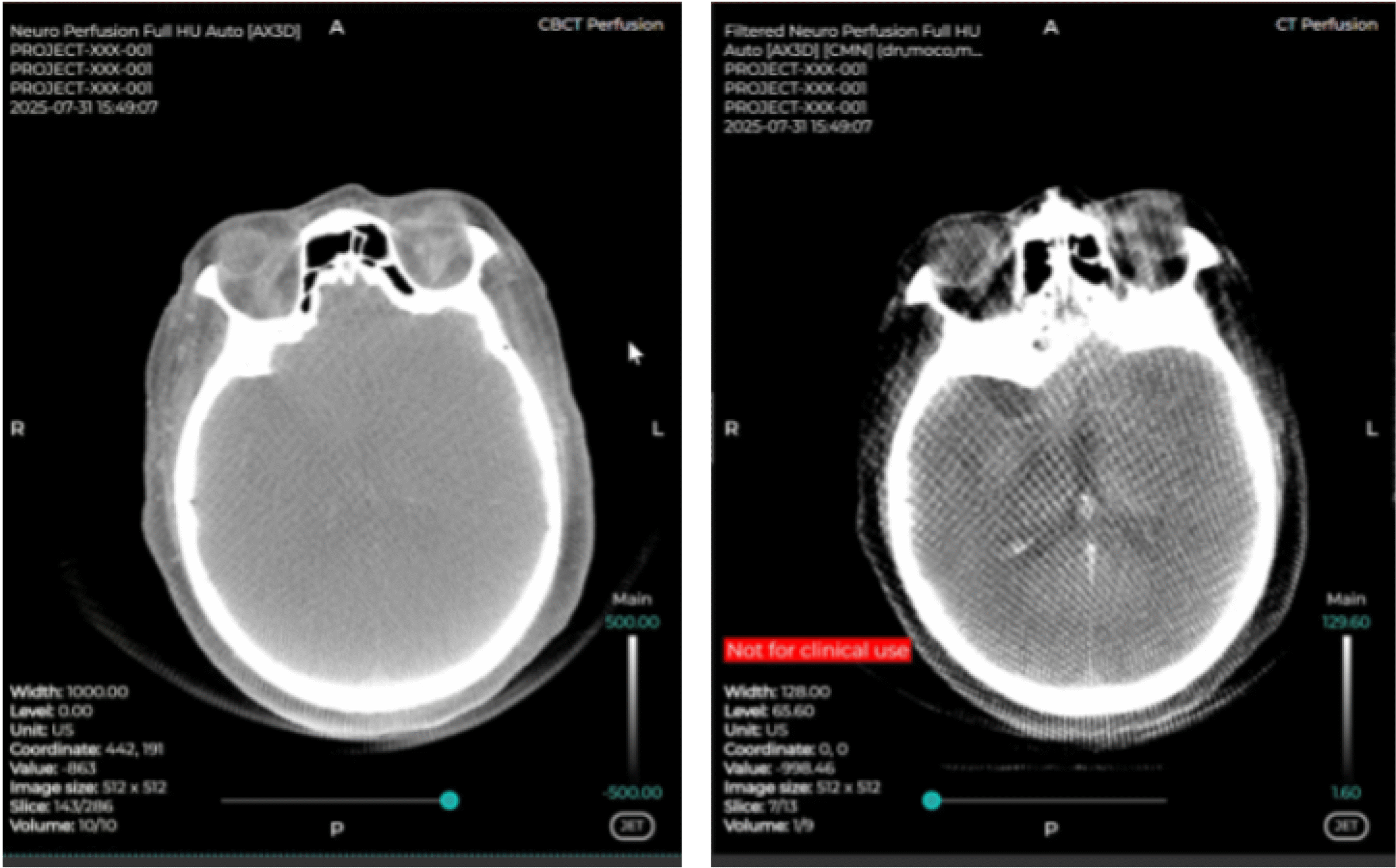
CBCT Imaging

Side-by-side comparison: The left-hand side is the raw CBCT data, while the right-hand side panel is the pre-processed data.
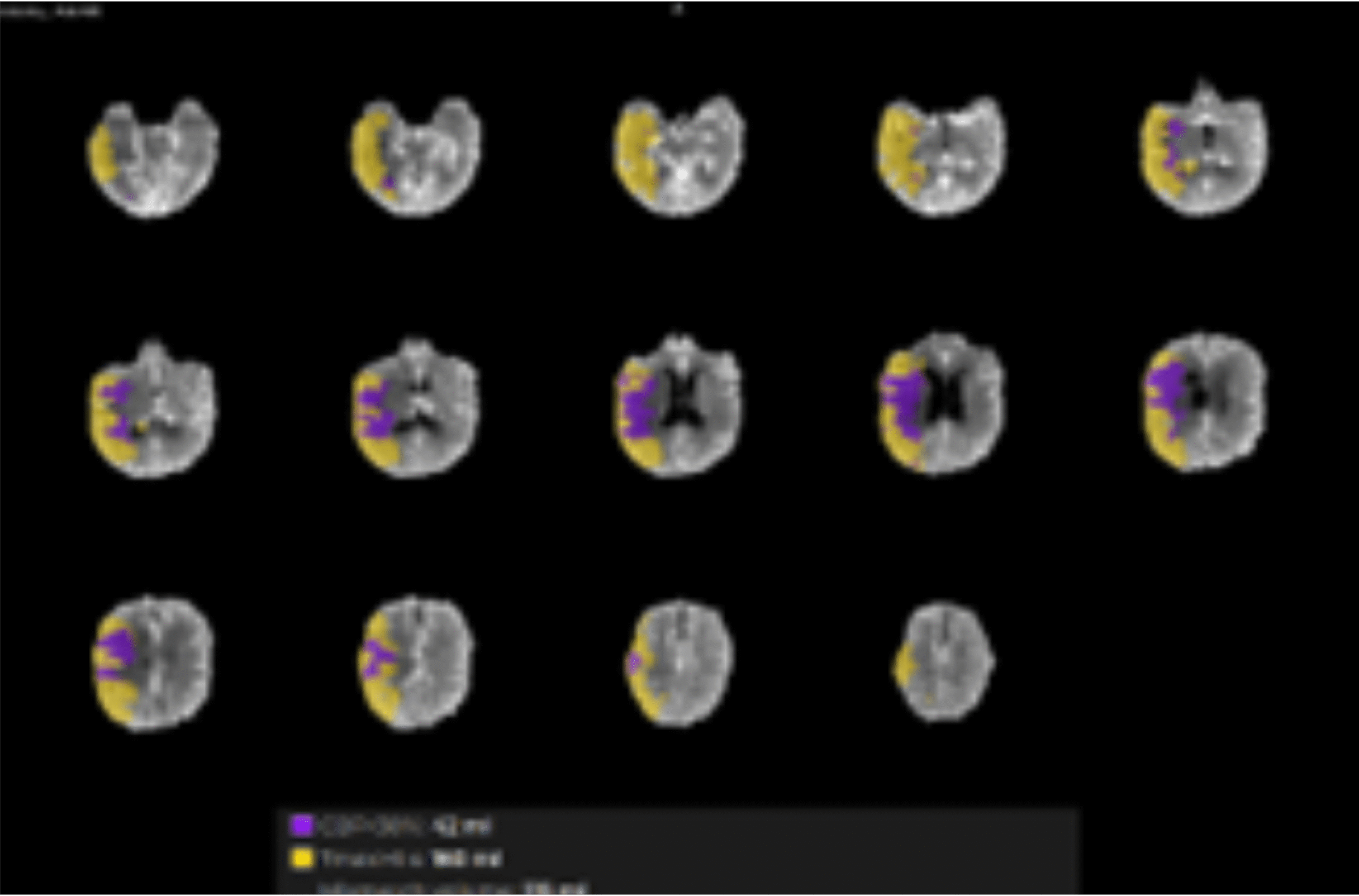
Using CMN software in the angio suite delivers results comparable to conventional CT/MR perfusion.

Explore CMN!

Fast. Reliable. Personalized.

Discover how Cercare Medical Neurosuite (CMN) enhances post-processing images and provides actionable insights from advanced biomarkers - tailored to your workflow.

Fill-out the form below, and a representative will contact you.

Thank you for uploading your DICOM files.

Your submission has been received successfully.

Next steps:

  • Our team will analyze the uploaded data.
  • A Cercare Medical representative will reach out to you once the analysis is complete.
  • Rest assured that all files will be deleted immediately after use, in line with our data protection policies.
Perfusion Summit 2026
Date: 26 March 2026, Thursday
Time: 10:15 - 17:40 (CET)
Venue: Concorde Hall, Hilton Paris Hotel, CDG
Participation is Optional

Hands-On Workshops
Date: 27 March 2026

Workshop selection is optional and does not confirm registration. Confirmation and further details will be provided in January 2026. Please note that seating is limited.
By participating in this event, you consent to the use of your image, voice, and likeness in photographs, and videos for promotional purposes, in accordance with GDPR regulations.

Sign up for the upcoming Perfusion & Metabolic Imaging Community (PMIC)

Request a demo

Let us give you a tour around our solution.

Fill in your credentials, and a member of the Cercare Medical team will contact you with a date and time proposal that fits your schedule.
})